
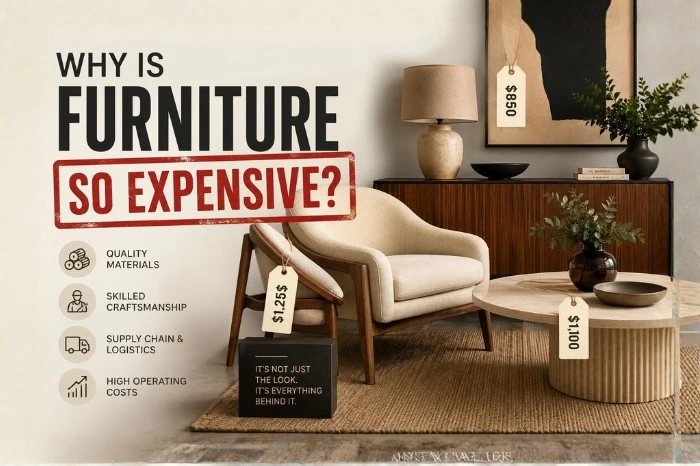
Furniture is one of those purchases that can feel expensive before you even understand what you are paying for. A sofa can cost less than a weekend trip or more than a used car. A desk can be a flat-pack work surface, a solid walnut piece, or a rare collector object. The word “furniture” covers all of them, which is why the price range can feel so strange.
The real question is not only why furniture is expensive. It is whether the price is being carried by better materials, skilled labor and durability, or by branding, markup and a pretty surface that will not age well.
Good furniture costs more for real reasons. Bad expensive furniture also exists. Knowing the difference is where the buyer has power.
Instant Answer: Why Is Furniture So Expensive?
Furniture is expensive because the final price includes much more than wood, fabric or metal. A well-made piece has material costs, skilled labor, design time, joinery, upholstery, finishing, freight, warehousing, retail overhead and sometimes tariffs or import costs. Larger items also cost more to ship and store because they take up space and are easy to damage. Expensive furniture can be worth it when the construction, materials, comfort and lifespan justify the price. But a high price does not always mean high quality. Some furniture is costly because of brand markup, trend demand or vague “designer” language. The smartest buyer looks at construction, materials, repairability, provenance and daily use before paying a premium.
Why Furniture Feels So Expensive Now
Furniture feels expensive because it sits at the intersection of several cost pressures. It is material-heavy, labor-heavy, bulky to move and often expensive to return. Unlike a small decor item, a table, sofa, bed or cabinet has to survive weight, movement, moisture, sunlight, daily use and years of cleaning.
There is also a psychological piece. Shoppers often compare a high-quality table with a flat-pack table that looks similar in a product photo. The cheaper piece may use thinner boards, engineered panels, printed finishes, lighter hardware and simpler joinery. Those differences may not be obvious online, but they show up after years of use.
Furniture pricing also moves with broader household costs. The U.S. Bureau of Labor Statistics tracks household furnishings and operations through the Consumer Price Index, with the data also available through FRED. That makes furniture pricing more dynamic than many shoppers expect, especially when materials, labor, freight, imports and demand move at the same time.
The 9 Biggest Reasons Furniture Costs So Much
| Cost driver | Why it raises the price | Buyer check |
|---|---|---|
| Materials | Solid hardwood, quality leather, wool, linen, brass, stone and premium hardware cost more than particleboard, plastic or printed laminate. | Ask what the piece is actually made from, not only what it looks like. |
| Labor | Cutting, joinery, sanding, upholstery, stitching and finishing take time and skill. | Look for clean seams, stable joints, smooth drawers and careful finishing. |
| Construction | Mortise-and-tenon joinery, dovetails, kiln-dried frames and strong suspension systems cost more than staples and glue alone. | Inspect joints, drawer boxes, frame stability and underside construction. |
| Upholstery | Sofas and chairs include frames, foam, springs, webbing, fabric, leather and sewing labor. | Sit on it, check cushion density, ask about frame and suspension. |
| Finishing | Staining, sealing, polishing, lacquering and hand-rubbing add labor and affect durability. | Look for even finish, protected edges and no sticky or cloudy areas. |
| Shipping | Furniture is bulky, heavy and easily damaged, so freight, packaging and returns are costly. | Ask about delivery, assembly, return fees and damage policy. |
| Retail overhead | Showrooms, storage, staff, designers, websites and customer service are built into the price. | Decide whether the service and support justify the premium. |
| Brand and design | Original design, limited production, licensing and brand reputation can increase price. | Separate design value from ordinary markup. |
| Provenance | Vintage, designer, antique or culturally recognized pieces can carry collector value. | Ask for maker details, labels, invoices, age and condition notes. |
Materials Matter, But They Are Not the Whole Price
The easiest explanation for expensive furniture is “better materials,” but that is only part of the answer. A solid oak table, a walnut desk, a marble-topped cabinet or a leather sofa will usually cost more than a piece made with cheaper substitutes. But raw material is only the starting point.
The USDA Forest Products Laboratory’s Wood Handbook explains wood and wood-based products as engineering materials, including physical properties, design considerations and practical applications. That matters because furniture is not simply decorative. It has to stay stable while being handled, loaded, cleaned and moved over time.
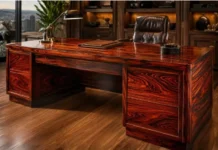
This is why the most expensive material is not always the best material for every use. A rare wood may be beautiful, but it may also be heavy, difficult to work with, legally sensitive or impractical for everyday furniture. Cocobolo is a good example. A cocobolo desk can be valuable partly because the wood is rare and dramatic, but maker, condition, provenance and documentation can matter just as much as the material itself.
For ordinary buyers, the better question is not “What is the most expensive wood?” It is “Is this material right for the way I will use the piece?” That is why practical comparisons of the best woods for desktops can matter more than chasing the rarest option.
Labor Is Often the Invisible Cost
Furniture is still a physical object shaped by people, machines or both. Even when production uses modern equipment, skilled labor often decides whether a piece feels solid or flimsy.
That labor can include selecting boards, matching grain, cutting parts, shaping edges, assembling frames, making joints, sanding, applying finish, sewing upholstery, installing hardware and checking the final piece. A dining chair may look simple, but it has to be comfortable, level, balanced and strong enough to take repeated stress at the legs, seat and back.
Cheap furniture usually removes time from the process. It uses faster joinery, thinner materials, simplified finishing and flat-packed assembly. That can be perfectly fine for a temporary apartment, student room or low-use space. It becomes a problem when the buyer expects heirloom durability from a piece built to hit a low price.
Upholstered Furniture Has Its Own Cost Problem
Sofas, lounge chairs, dining chairs and beds often cost more because upholstery adds several layers of expense. A sofa is not just fabric wrapped around a frame. It may include kiln-dried wood, springs, webbing, foam, down, batting, fabric, leather, stitching, cushion shaping and sometimes removable covers.
This is also why two sofas that look similar online can feel completely different in person. The cheaper one may have lower-density foam, weaker suspension, a lighter frame or fabric that wears quickly. The expensive one may still be overpriced, but it may also be carrying real comfort and durability costs that are invisible in a photo.
Before paying more for upholstery, sit on the piece if possible. Check how the cushions recover, whether the frame creaks, whether the seams are straight, and whether the fabric rating suits your household. A formal sitting room and a home with pets, children and daily movie nights need different standards.
Shipping, Warehousing and Returns Add More Than People Expect
Furniture is expensive to move because it is large, heavy and damage-prone. A lamp, shirt or book can be packed cheaply. A dining table or sofa needs protective packaging, freight space, careful handling and sometimes white-glove delivery.
Returns are also expensive. A returned sofa may need inspection, repackaging, repair, discounting or disposal. Retailers build some of that risk into prices. This is one reason a low sticker price can become less attractive once delivery, assembly and return fees appear at checkout.
Tariffs and Imports Can Change the Price
Furniture pricing can also be affected by trade policy. A 2026 Federal Register amendment stated that the duty rate for upholstered furniture would increase from 25 percent to 30 percent and the duty rate for kitchen cabinets and vanities would increase from 25 percent to 50 percent, subject to the details and exceptions in the proclamation. Those rules can affect importers, retailers and eventually shoppers, depending on product category, country, inventory and how much of the cost a seller absorbs.
This is not the main reason all furniture is expensive, but it is one reason furniture prices can shift even when the product itself has not changed.
Retail Markup Is Real, But It Is Not Always a Scam
Retail markup is part of furniture pricing. Stores have rent, staff, photography, designers, storage, delivery teams, customer service, returns, damaged inventory and marketing costs. Online brands have fewer showroom costs but still pay for advertising, logistics, warehousing, packaging and customer support.
The problem is not that markup exists. The problem is when markup is doing most of the work while the furniture itself is ordinary. A high price should be supported by construction, material quality, comfort, service, warranty, provenance or design value. If the seller cannot explain the price beyond vague words like “premium,” “luxury” or “designer-inspired,” the buyer should slow down.
Solid Wood, Veneer, MDF and Particleboard Are Not the Same Thing
One of the biggest reasons furniture prices vary is construction material. Solid wood furniture usually costs more because it uses real lumber throughout the structure. It can often be repaired, refinished and aged more gracefully. But solid wood can also expand, contract, warp or crack if poorly built or exposed to unstable humidity.
Veneer is often misunderstood. A wood veneer is a thin layer of real wood applied over a stable core. Good veneer work can be beautiful, durable and appropriate, especially with expensive or rare woods. It is not the same as a printed laminate pretending to be wood.
MDF and particleboard can keep costs down and work well in some painted, low-stress or budget pieces. The tradeoff is that they are usually harder to repair and less forgiving if edges swell, screws loosen or moisture gets inside.
That is why material language matters. Compared with common types of wood used in furniture, engineered materials may lower cost, but they also change repairability, weight, lifespan and resale value.
Why Designer and Collector Furniture Can Cost So Much
Designer, vintage and collector furniture follows a different pricing logic. The price may reflect not only the material and labor, but also the maker, age, scarcity, condition, documentation, design history and cultural relevance.
A rare desk, chair or cabinet can become valuable because it belongs to a recognized design movement, was made by a notable craftsperson, has original labels or invoices, or appears in a cultural context people remember. In that world, price is closer to the logic of valuable collectibles than ordinary home shopping.
This is also where rare woods can matter. Cocobolo, ebony, rosewood, walnut burl and other premium materials can influence value, especially when the workmanship is strong. But even among the most expensive woods in the world, the wood name alone is not enough. A poor object made from rare material is still a poor object.
When Expensive Furniture Is Worth It
Expensive furniture is usually worth considering when the piece will be used often, kept for years, repaired rather than replaced, or placed where it anchors the room.
| Worth paying more for | Why |
|---|---|
| Sofa or sectional | Comfort, frame strength, cushion quality and fabric durability affect daily life. |
| Dining table | A strong table can last for decades and tolerate refinishing. |
| Bed frame | Stability, joinery and material strength matter because it carries weight every night. |
| Desk | A good desk improves work comfort and can become a long-term room anchor. |
| Storage furniture | Drawers, hinges, tracks and case construction decide whether the piece lasts. |
| Vintage or designer pieces | Provenance, maker, condition and scarcity may support long-term value. |
The simplest test is this: if the furniture will be used every day, touched constantly, moved rarely and kept for years, quality matters more.
When Expensive Furniture Is Not Worth It
Expensive furniture is not automatically smart. A high price can be weak value when the piece is trend-driven, fragile, hard to maintain, poorly described or made from ordinary materials with luxury language around it.
Be cautious when a listing hides construction details, avoids material specifics, uses only mood photography, has a vague warranty, or makes a basic piece sound rare without proof. “Walnut finish” does not mean solid walnut. “Leather match” does not mean full leather. “Designer style” does not mean designer provenance.
Also be careful with pieces for short-term rentals, children’s rooms, temporary apartments or trend-heavy spaces. In those cases, a mid-range or secondhand piece may be the smarter buy.
How to Tell If Furniture Is Worth the Price
Use this quick inspection before paying a premium:
- Ask what it is made from. Look for solid wood, veneer, plywood, MDF, particleboard, metal type, fabric type and leather grade.
- Check the joints. Strong joinery usually tells you more than a glossy product photo.
- Open the drawers. They should move smoothly, sit squarely and feel stable.
- Look underneath. The underside often reveals the real construction.
- Test weight carefully. Heavy does not always mean good, but flimsy is rarely a good sign.
- Ask about finish and maintenance. Some materials require more care than buyers expect.
- Read the warranty. A confident warranty can signal better construction, though it is not proof by itself.
- Check return and delivery terms. A cheap item with expensive delivery and return fees may not be cheap.
- Compare sold prices, not only listing prices. This matters most for vintage and designer pieces.
- Match the piece to your lifestyle. A delicate piece may be beautiful but wrong for heavy daily use.
The Fast Furniture Problem
The lower end of furniture pricing has trained many buyers to expect large items at surprisingly low prices. That has a cost too. Fast furniture is often designed around speed, low price and easy replacement, not long life or repair.
The environmental consequence is visible. The U.S. Environmental Protection Agency reported that furniture and furnishings generated 12.1 million tons of municipal solid waste in 2018, representing 4.1 percent of total MSW generation. That figure was up from 2.2 million tons in 1960.
This does not mean everyone should buy expensive furniture. It means the cheapest option is not always the cheapest over time. If a piece fails quickly, cannot be repaired and has almost no resale value, the true cost includes replacement, disposal and frustration.
The Practical Verdict
Furniture is expensive because it combines materials, labor, construction, shipping, overhead and sometimes brand or collector value. A higher price can be justified when the piece is well built, repairable, comfortable, durable and suited to daily life. It can also be inflated when the seller relies on styling, vague luxury language or brand perception more than construction.
The best buyer does not ask only, “Why is this expensive?” A better question is, “What exactly am I paying for, and will that value still be there five or ten years from now?”
FAQs About Expensive Furniture
Furniture prices are affected by materials, labor, shipping, retail overhead, demand, tariffs and return costs. Large items are especially expensive to move, store and repair, which makes the final price higher than the raw material cost alone.
Expensive furniture is worth it when the price reflects better materials, stronger construction, comfort, durability, repairability or provenance. It is not worth it when the cost is mostly branding, trend appeal or vague luxury language.
Solid wood furniture costs more because it uses real lumber, requires careful drying, cutting, joinery and finishing, and can often be repaired or refinished. The price also depends on species, grade, design and labor.
No. Good veneer uses a thin layer of real wood over a stable core and can be appropriate for fine furniture. The problem is when sellers confuse veneer with solid wood, or when printed laminate is marketed as if it were real wood.
Sofas are expensive because they include a frame, suspension, cushions, upholstery fabric or leather, sewing, padding, finishing, shipping and delivery. Comfort and durability depend heavily on parts buyers cannot always see in product photos.
Custom furniture costs more because it removes the savings of mass production. The maker spends time on design, measurements, material selection, fabrication, finishing and adjustments for one specific buyer or space.
Spend more on pieces you use every day, such as sofas, beds, desks, dining tables and storage furniture. Spend less on trend pieces, temporary rooms, children’s furniture, small accent tables and decor that may change quickly.
No. Cheap furniture can be sensible for temporary needs, rentals, dorms, children’s rooms or low-use areas. It becomes a poor value when the buyer expects long-term durability, repairability or resale value from a piece that was built for short-term use.