

Cocobolo wood collectibles are sought after because the material does not behave like ordinary decorative wood. It is dense, naturally lustrous, richly colored and difficult to source in large, clean pieces. That makes cocobolo more common in smaller collectible objects than in everyday furniture.
The best cocobolo pieces are not valuable only because they look beautiful. They become collectible when the wood is used well, the craftsmanship is clear, the object has a practical or cultural use, and the seller can explain what the piece is made from.
This guide looks at five cocobolo wood collectibles that buyers still search for: desks, chess boards, guitars, pens and rings. It also explains what makes each one valuable, where buyers should be careful, and why documentation matters when a piece is expensive or being sold internationally.
Summary: What Are Cocobolo Wood Collectibles?
Cocobolo wood collectibles are decorative or functional objects made with cocobolo, a rare Central American rosewood most often associated with Dalbergia retusa. Popular examples include cocobolo desks, chess boards, guitars, pens, knife handles, bowls, boxes and rings. They are valued for the wood’s dramatic red, orange, brown, black and sometimes purple grain, its dense feel, and its natural glossy finish. The best pieces usually have clear craftsmanship, visible grain, honest material details and responsible sourcing. Buyers should check whether the item is solid cocobolo, veneer, laminate, or simply cocobolo-style before paying premium prices.
For readers who want the deeper material story behind the wood itself, our guide to cocobolo wood explains its origin, rarity, legal status, uses and alternatives in more detail.
Cocobolo Wood Collectibles at a Glance
| Collectible | Why people collect it | Buyer note |
|---|---|---|
| Cocobolo desk | Large statement furniture with rare wood, design value and pop-culture interest | Check solid wood vs veneer, maker, condition and provenance |
| Cocobolo chess board | Decorative contrast, fine joinery and display value | Check board flatness, square alignment, finish and paired woods |
| Cocobolo guitar | Visual grain, tonewood interest and luthier craftsmanship | Confirm whether it uses solid cocobolo, veneer or cocobolo-pattern laminate |
| Cocobolo pen | Accessible entry-level collectible with visible grain in a small object | Hardware quality matters as much as the wood blank |
| Cocobolo ring | Personal gift item with warm color and handcrafted appeal | Check finish, lining, sizing and water resistance |
5 Cocobolo Wood Collectibles Worth Knowing
Cocobolo is used in many small specialty objects, but not every item deserves collector-level attention. The pieces below are worth discussing because they show the wood clearly, carry a practical or cultural use, and give buyers a reason to care beyond simple decoration.
1. Cocobolo Desk

A cocobolo desk is the most dramatic item in this group because it uses the wood at furniture scale. That also makes it the hardest one to buy with confidence. A real cocobolo desk can be rare, heavy, expensive and difficult to verify, especially if the listing does not clearly explain whether the piece is solid cocobolo, cocobolo veneer or another rosewood-style material.
The desk became especially recognizable through Better Call Saul, where it worked as a symbol of ambition, status and expensive office taste. In the real design market, cocobolo desks are also connected with collectible furniture makers, especially Don S. Shoemaker and Mexican modernist pieces where maker labels, invoices and provenance can affect value.
For buyers, the desk is the highest-reward and highest-risk cocobolo collectible. It can be the centerpiece of a study or office, but it should never be bought only because the word “cocobolo” appears in the listing. Condition, construction, maker, age, documentation and sourcing all matter.
Price note: Large cocobolo desks and designer pieces can reach five-figure asking prices, but listing prices are not the same as final sale values. Treat any high price as a starting point for verification, not proof of value.
2. Cocobolo Chess Board

A cocobolo chess board works because the wood’s color and grain naturally suit a display object. The reddish-brown and dark streaked surface can create a rich contrast when paired with a lighter wood such as maple or a pale veneer. A good board feels less like a casual game set and more like an object that belongs on a desk, library table or collector’s shelf.
The value of a cocobolo chess board depends on more than the wood name. Look at the accuracy of the squares, the stability of the board, the finish, the joinery and whether the piece lies flat. A beautiful board that warps, cracks or uses vague materials is not a strong collectible.
This is also where buyers should be careful with wording. Some boards are made with solid cocobolo, some use veneer, and others may use a cocobolo-like finish or another rosewood. Veneer is not automatically bad, but the seller should describe it honestly.
Price note: High-end cocobolo chess boards can be expensive, especially when made with premium paired woods and careful construction. The better question is not only “how much,” but whether the materials and workmanship justify the price.
3. Cocobolo Wood Guitar
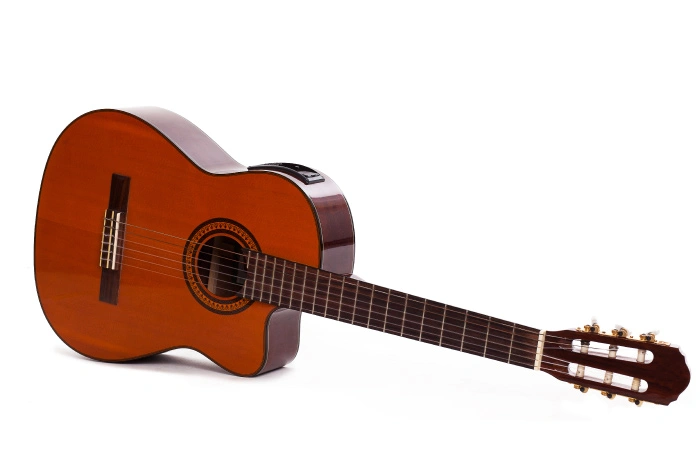
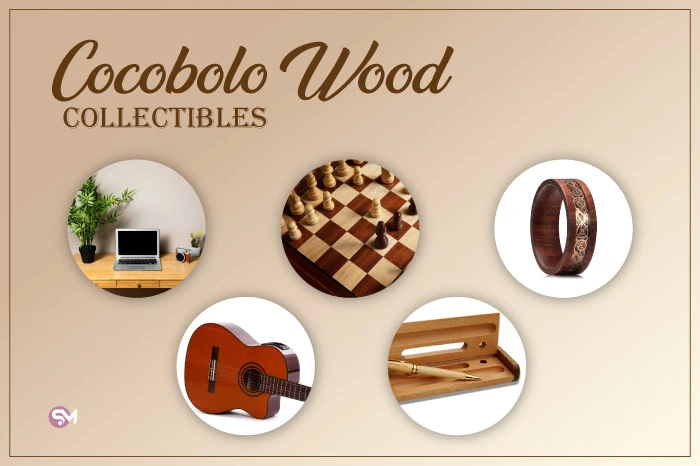
Cocobolo guitars appeal to players and collectors for two reasons: the wood looks striking, and it has a serious tonewood reputation. Cocobolo is dense and stiff, and some guitar makers value it for a bright, responsive sound with strong visual character.
Still, this section needs careful wording. Not every guitar described as “cocobolo” is built with solid cocobolo back and sides. Some instruments use cocobolo veneer, and others use cocobolo-pattern high-pressure laminate for appearance and durability. That does not make the guitar bad, but it changes what the buyer is actually paying for.
A serious buyer should ask whether the guitar uses solid cocobolo, laminated cocobolo, cocobolo veneer or only a printed cocobolo pattern. They should also consider the builder, bracing, condition, neck angle, repairs, electronics and overall playability. The wood matters, but it does not carry the instrument by itself.
Price note: Cocobolo guitars can range from accessible laminate-backed instruments to expensive custom or limited-edition builds. Always separate material claim, maker reputation and actual condition before judging value.
4. Cocobolo Wood Pen
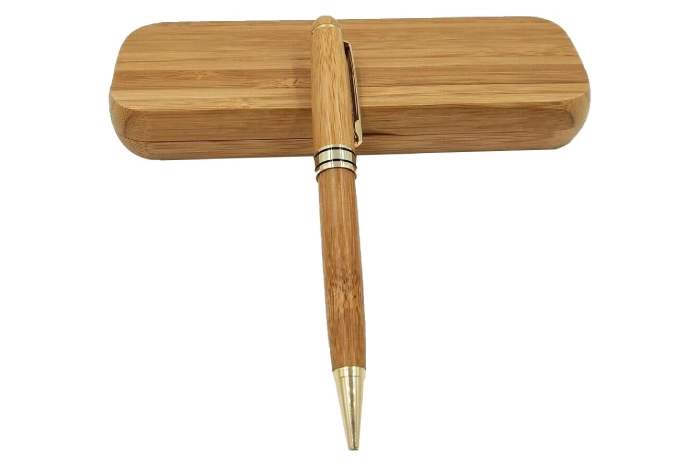
A cocobolo wood pen is one of the easiest ways to own the material without entering the high-risk world of rare furniture. Because a pen uses a small blank, it can show the wood’s color and grain without requiring a large board. That makes it more accessible, easier to ship and easier to compare.
The best cocobolo pens balance the wood with good hardware. A beautiful blank cannot save a weak mechanism, rough fit or poor finish. Look at the metal parts, weight, grip comfort, refill type, polish and whether the wood has been sealed well enough for repeated handling.
Cocobolo’s density gives a pen a satisfying feel, but the finish still matters because pens are touched constantly. A poorly finished pen can become uncomfortable or lose its appeal quickly.
Price note: Cocobolo pens are usually the most approachable collectible in this list. They are better for gift buyers and first-time collectors than for people looking for investment-grade rarity.
5. Cocobolo Wood Ring
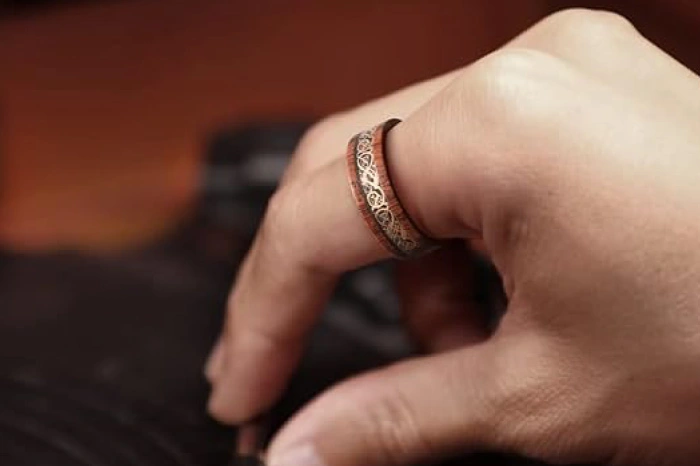
A cocobolo wood ring is a small, personal collectible rather than a major design object. Its appeal comes from the warmth of the color, the natural grain and the fact that no two pieces of wood look exactly the same.
For buyers, the important details are finish, sizing and construction. Some wooden rings are pure wood, while others use a metal or resin liner for strength and comfort. That can be useful because rings face moisture, sweat, knocks and daily handling in a way that a display object does not.
A cocobolo ring can work well as a meaningful gift, especially for someone who likes natural materials, wood anniversary gifts or handcrafted jewelry. But it should not be oversold as automatically rare or valuable. At this scale, craftsmanship and finish usually matter more than material volume.
Price note: Cocobolo rings are generally smaller purchases. Pay attention to comfort, durability and return policy rather than treating the wood name alone as a premium signal.
What Makes a Cocobolo Collectible Valuable?
The value of a cocobolo collectible does not come from the wood name alone. Cocobolo often appears in conversations about the most expensive woods in the world, but a collectible still needs craftsmanship, condition and honest material details to justify a premium price.
Like other valuable collectibles, cocobolo pieces become more convincing when the story behind the object is supported by maker details, condition, age or provenance. A beautiful wood name may attract attention, but documented quality is what makes the piece more trustworthy.
| Value factor | Why it matters |
|---|---|
| Material honesty | The seller should explain whether the item is solid cocobolo, veneer, laminate or cocobolo-style. |
| Visible grain | Strong color variation and natural figure are part of cocobolo’s appeal. |
| Craftsmanship | Joinery, finishing, balance and usability matter more than the wood name alone. |
| Maker or provenance | Designer furniture, luthier instruments and documented vintage pieces can carry added value. |
| Condition | Cracks, warping, repairs, fading and poor refinishing can reduce value. |
| Legal sourcing | High-value or international purchases should come with clear sourcing or import/export information. |
What to Check Before Buying Cocobolo Wood Collectibles
Because cocobolo is expensive and legally sensitive, buyers should be more careful than they would be with ordinary wooden objects. A beautiful photo is not enough.
- Ask for the species name. Cocobolo is most often associated with Dalbergia retusa, but listings can be vague.
- Check solid wood vs veneer. Veneer can be legitimate, but it should not be priced like a fully solid piece.
- Look for provenance. Maker labels, invoices, old receipts and estate history matter on expensive furniture.
- Study the finish. Cocobolo can look naturally glossy, but poor finishing can hide problems.
- Ask about legal sourcing. This matters most for new, expensive or internationally shipped items.
- Be careful with “style” wording. “Cocobolo-style” does not always mean the item contains cocobolo wood.
- Use an expert for high-value pieces. For desks, guitars or vintage designer furniture, a specialist can save you from overpaying.
Compared with common types of wood used in furniture, cocobolo needs more caution because of its rarity, oils, price and sourcing concerns. That does not make every cocobolo piece risky, but it does make vague listings harder to trust.
Challenges with Cocobolo Wood
Cocobolo is beautiful, but it is not a simple material. It is dense, oily and sometimes difficult to glue or finish. Its color can also bleed during finishing if the maker does not seal it carefully.
There is also a safety issue during woodworking. Finished cocobolo objects are not usually the main concern, but cocobolo dust can irritate some people when the wood is cut, sanded or turned. Woodworkers should use dust collection, eye protection, gloves and respiratory protection when working with it.
Legal sourcing is another serious point. Cocobolo belongs to the Dalbergia group of rosewoods, and international trade can involve CITES rules. Buyers should be especially careful with raw wood, veneer, newly made high-value pieces or anything being imported or exported. For a broader material background, The Wood Database identifies cocobolo with Dalbergia retusa and notes its natural oils, workability challenges, dust irritation concerns and CITES-related trade status.
The safest approach is simple: buy from sellers who can explain what the item is, how it was made and where the wood came from.
If the goal is a practical work surface rather than a rare display piece, everyday options covered in our guide to the best woods for desktops will usually be easier to buy and maintain.
FAQs About Cocobolo Wood Collectibles
Cocobolo wood collectibles are decorative or functional objects made with cocobolo wood, such as desks, chess boards, guitars, pens, bowls, boxes, rings and knife handles. They are valued for the wood’s dense feel, dramatic grain, natural luster and rarity.
A cocobolo desk or designer furniture piece is usually the most valuable type because it requires more material and may involve maker, condition and provenance value. Smaller objects such as pens and rings are easier to buy but usually less valuable.
Many finished cocobolo items can be legal to own, but international trade may require documentation depending on the item, country, date and shipment details. Buyers should ask for provenance and legal sourcing information, especially for expensive or newly made pieces.
No. Some guitars use solid cocobolo, some use veneer, and some use cocobolo-pattern laminate or high-pressure laminate. Buyers should check the builder’s specifications before assuming the guitar is made from solid cocobolo wood.
Real cocobolo often has reddish, orange, brown, black or purple streaked grain, a dense feel and natural luster. But appearance is not enough. For expensive items, ask for the species name, seller details, maker information and expert verification.
Yes. Cocobolo pens and rings are easier entry points because they use smaller pieces of wood and usually cost less than furniture or instruments. The best examples still need good finish, honest material description and durable construction.