

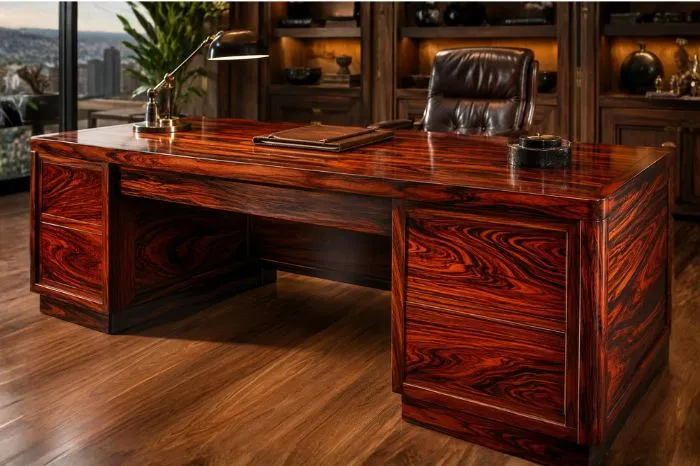
If you are interested in collecting rare and unique items, you might fancy cocobolo desks. Known for their scarcity, these desks originate from a special Central American tree. They are crafted from a luxurious wood that is not widely available as cocobolo is under IUCN Red List due to overharvesting and habitat loss.
But what exactly is a Cocobolo desk? It is a desk built with cocobolo wood. A Cocobolo desk makes your room look considerably more sophisticated. It’s so special, everyone who sees it in your office will be thoroughly impressed.
You will not find these desks at many places because they are not cheap. They are made of one of world’s most expensive wood, Cocobolo. Wondering about the price of a Cocobolo desk? Depending on the design, it might cost you above $10,000 (we found one for $15,000 on ebay). If you appreciate unique items, you will certainly want this desk in your collection.
Cocobolo Desk at a Glance
- A cocobolo desk is a luxury desk made from cocobolo wood, a rare Central American hardwood most often associated with Dalbergia retusa.
- It is expensive because cocobolo is dense, rare, slow-growing and difficult to work with, especially in large furniture-grade pieces.
- The desk became famous through Better Call Saul, where Jimmy McGill ordered one after joining Davis & Main.
- Cocobolo is prized for its dramatic grain, with reddish-brown, orange, black and sometimes purple streaks running through the wood.
- Its natural oils help create a glossy, almost glass-like finish, but they can also make the wood harder to glue and finish properly.
- Real cocobolo furniture is rare, and many desks on the market are custom-made, vintage, veneer-based or collector-grade pieces.
- Cocobolo is a regulated wood, and Dalbergia retusa is listed as Critically Endangered by the IUCN, so sourcing and documentation matter.
- Before buying one, ask for provenance, species details and import/export documents if the desk is being sold internationally.
- Good alternatives include walnut, cherry, mahogany, rosewood-style veneer, acacia, reclaimed wood and premium laminate.
Why Is Cocobolo Wood So Rare?
The main reason Cocobolo wood is so rare is its limited availability. It comes from Central America and is mostly associated with a tree known as Dalbergia retusa. This tree does not grow like common furniture woods that are easily available in the market.
Cocobolo is also not a wood that gives large furniture-grade pieces very easily. The tree is not very large compared to many other hardwood trees, so getting wide and clean boards for a full desk is difficult. This is one reason why Cocobolo is more commonly used for smaller luxury items, such as knife handles, pens, bowls, musical instruments, decorative boxes and collectibles.
Another reason is overharvesting. Because the wood is so beautiful and valuable, it has been heavily cut for many years. That is why genuine Cocobolo is now harder to source, especially when someone wants it for a large furniture piece like a desk.
This is also why a Cocobolo desk feels different from a normal wooden desk. It is not just a piece of furniture. It is made from a wood that is rare, slow to replace and difficult to get in large quantities.
How Much Does a Cocobolo Desk Cost?
A real Cocobolo desk is usually very expensive. You will rarely find a genuine Cocobolo desk at the price of a normal office desk.
Depending on the design, size, age and condition, a Cocobolo desk can easily cost thousands of dollars. Some rare or custom pieces may move above $7,000 to $10,000, and collector-grade desks can cost even more. If the desk is connected with a known designer, has original documentation, or comes with a matching chair, the price can go higher.
The final price usually depends on a few things:
- Whether the desk is made from solid Cocobolo or only Cocobolo veneer
- The size of the desk
- The quality of the grain and color
- Whether the piece is vintage, custom-made or newly made
- The condition of the wood and finish
- The maker or designer behind the desk
- Whether proper sourcing or ownership documents are available
This is why buyers should be careful when they see a Cocobolo desk for sale. Some listings may use the name Cocobolo for marketing, but the desk may only have a thin veneer or may not be Cocobolo at all.
If you are paying a high price, always ask the seller what type of Cocobolo has been used and whether the piece is solid wood, veneer, restored or original.
Cocobolo Desk in Better Call Saul: Why Jimmy McGill Wanted One
The cocobolo desk became famous through Better Call Saul. Jimmy McGill orders one after joining Davis & Main, and the desk becomes a symbol of the polished, expensive lawyer image he wants to project.
It is not just furniture in the show. It represents status, confidence and Jimmy’s desire to look like he belongs in a more elite legal world. That is why many viewers started searching for “cocobolo desk” after watching the series.
Normal Desk vs Cocobolo Desk: A Comparison
| Factors | Normal Wood | Cocobolo Wood |
|---|---|---|
| Price | Lower in Price | Really Expensive |
| Durability | Depends on the type of wood you’re using | Really Durable and even resistant to insect attack |
| Appearance | The outlook of a normal wooden desk depends on the type of wood you’re using | Cocobolo is a kaleidoscope of colors and this makes its appearance really unique |
| Existence | You can easily find normal wood everywhere | This wood is quite rare and is only native to central America |
| Workability | Normal woods are quite easy to work with and can easily be glued together | High amounts of oils are found in this wood which makes it difficult to glue together. |
The main issue is how the wood was sourced and whether it is being traded legally. Cocobolo comes from a protected group of woods, and international trade can require proper documents. This matters even more if the desk is being imported or exported from one country to another.
Is Cocobolo Legal and Ethical to Buy?
Cocobolo is not automatically illegal to own. If someone already has an old Cocobolo desk in their home or office, that does not mean they are doing anything wrong.
So, the safer question is not only, “Is this desk made of Cocobolo?” The better question is, “Where did this Cocobolo come from?”
A responsible buyer should ask for:
- The scientific name of the wood
- Any old purchase records or provenance
- Details about whether it is vintage or newly made
- Import or export paperwork if the desk is crossing borders
- Seller confirmation that the wood was legally sourced
Buying a vintage Cocobolo desk with a clear history is usually easier to justify than buying a new piece with no sourcing details. Since Cocobolo is rare and heavily regulated, buyers should avoid suspiciously cheap or undocumented listings.
In simple words, Cocobolo is beautiful, but it should be bought with care.
Read More: Valuable Collectibles
What to Check Before Buying a Cocobolo Desk
If you are planning to buy a Cocobolo desk, do not rush the purchase. These desks are expensive, and a wrong decision can cost you a lot.
Here are a few things you should check first.
Check if it is solid wood or veneer
Some desks are made from solid Cocobolo, while others only use Cocobolo veneer on the surface. Veneer is not always bad, but it should not be priced like a full solid Cocobolo desk.
Ask for the wood name
Ask the seller if the wood is Dalbergia retusa or another related species. This helps you know whether the desk is really Cocobolo or just a similar-looking wood.
Ask for documents
If the desk is old, ask for provenance, old receipts, maker labels or any other record. If it is being shipped internationally, ask about import and export documents.
Check the condition
Look for cracks, fading, loose joints, water marks, bad repairs and damaged drawers. A beautiful Cocobolo desk can still lose value if it has been poorly repaired.
Be careful with very cheap listings
A genuine Cocobolo desk is rarely cheap. If the price looks too good, there may be a reason. It could be veneer, damaged, mislabeled or made from another wood.
Ask an expert if the price is high
If the desk costs thousands of dollars, it is better to ask a woodworker, furniture restorer or antique furniture expert to inspect it before buying.
A Cocobolo desk can be a wonderful collector’s item, but only when you know exactly what you are buying.
Best Alternatives to a Cocobolo Desk
A Cocobolo desk is beautiful, but it is not the easiest or most practical choice for everyone. It is rare, expensive and harder to source responsibly. If you mainly want a rich-looking desk for your office, there are some good alternatives that still give a premium feel.
| Alternative | Why it works well for desks |
|---|---|
| Walnut | Dark, elegant and ideal for executive office desks |
| Cherry | Warm reddish tone that becomes deeper with age |
| Mahogany | Classic luxury look for traditional workspaces |
| Rosewood-style veneer | Gives a similar rich appearance at a lower cost |
| Reclaimed wood | Better choice for buyers who care about sustainability |
| Premium laminate | Budget-friendly, durable and easy to maintain |
Walnut is probably the best everyday alternative if you want a serious office desk without the cost and sourcing concerns of Cocobolo. Cherry is a good option if you like warmer reddish tones, while mahogany works well for a more traditional luxury office look.
For readers who want to compare the wood itself in more detail, our guide on the history and alternatives of Cocobolo wood explains the broader background.
You may Also Like: Best wood for Desktop
Why People Love Cocobolo Desk?
The main reason why a vast majority of people adore the Cocobolo desk is because of its rareness. As the Cocobolo desk is crafted from a super rare kind of hardwood i.e., Cocobolo hardwood. This tree grows at such a slow speed that it takes years to grow, so they are really rare to harvest, leading to the unbelievably high Cocobolo wood price.
Moreover, the small size of these trees makes it hard to produce lumber for use. All these factors combine to make the Cocobolo wood as precious and unique as it is.
So, the low availability of this wood makes its demand quite high and as a result, people owning artifacts of this wood are considered wealthy and super-rich in the society. Because of these reasons, most people prefer getting a Cocobolo desk.
Another thing that contributes to the overwhelming fame and popularity of the Cocobolo desk is its artistic beauty. The Cocobolo wood desk is a class of its own and this is the main reason why popular series such as Breaking Bad and Better Call Saul, has portrayed it as a symbol of class and luxury.
Resultantly, you can see a visible rise in the demand for Cocobolo wood desks for sale as more and more people are trying to buy them so they can leave an impression on their clientele.
Frequently Asked Question
A Cocobolo desk is a desk made from Cocobolo wood, a rare Central American hardwood known for its reddish-brown color, dark grain lines, natural oils and glossy finish.
A Cocobolo desk is expensive because the wood is rare, dense, difficult to source and hard to work with. Large furniture-grade pieces are not easy to find, which makes desks made from this wood even more valuable.
A Cocobolo desk can cost thousands of dollars. Many rare, custom or collector-grade pieces can move above $7,000 to $10,000, while special vintage or designer examples may cost even more.
Cocobolo is not automatically illegal to own, but its trade is regulated. If you are buying, selling or importing a Cocobolo desk, you should ask for proper sourcing details and documents where needed.
Yes, Dalbergia retusa, the species most commonly associated with Cocobolo, is considered highly threatened. That is why buyers should be careful about sourcing and avoid undocumented new pieces.
Walnut is one of the best alternatives because it looks rich, elegant and expensive without the same sourcing concerns. Cherry, mahogany, acacia and premium veneer are also good options.
Clean it with a soft cloth, avoid harsh chemicals and keep it away from direct sunlight and excess moisture. If the desk is valuable, ask a furniture expert before applying oils, wax or polish.