
Cockroaches have a reputation for being nearly impossible to eliminate, and there is some truth behind that perception. They are adaptable, fast-moving, capable of hiding in tiny spaces, and able to survive in conditions that would challenge many other household pests.
Still, cockroaches are not truly indestructible. The key to getting rid of them is understanding where they hide, what attracts them, and how to remove both the insects and the conditions that allow them to thrive. According to the U.S. Environmental Protection Agency, reducing access to food, water, and shelter is an important part of effective pest management. A combination of sanitation, exclusion, targeted treatment, and professional pest control when necessary can make a major difference.
Cockroach Control at a Glance
Effective cockroach control works best when homeowners address the conditions that help the insects survive instead of focusing only on the cockroaches they can see. The table below summarizes the main areas to check.
| Control Area | Why It Matters | What to Do |
|---|---|---|
| Food | Crumbs, grease, pet food, and open packages can support cockroach activity. | Clean spills and crumbs, seal dry foods, and keep garbage covered. |
| Water | Leaks, condensation, and standing water provide moisture cockroaches need. | Repair plumbing leaks, dry sinks, and inspect appliances for hidden moisture. |
| Shelter | Dark cracks, clutter, cabinets, and appliance voids provide protected hiding places. | Reduce clutter and inspect warm, dark, undisturbed areas regularly. |
| Entry Points | Small gaps around pipes, doors, windows, and walls can allow cockroaches to move through a home. | Seal cracks, repair gaps, and use weatherstripping or door sweeps where appropriate. |
| Monitoring | Knowing where activity is concentrated can help make treatment more targeted. | Check likely hiding areas and monitor for droppings, egg cases, or live cockroaches. |
There Are Thousands of Cockroach Species
Cockroaches are an incredibly diverse group of insects.
There are about 4,600 species of cockroaches, and roughly 30 of those are known to live around humans. Fortunately, only a relatively small number of species commonly become household pests. Depending on the region, homeowners may encounter German cockroaches, American cockroaches, Oriental cockroaches, or other varieties.
Identifying the species can help determine the best control strategy because different cockroaches may prefer different environments.
Some are strongly associated with kitchens and bathrooms, while others are more commonly found in basements, drains, crawl spaces, or outdoor areas.
A pest-control professional can help identify the species when homeowners are unsure what they are dealing with.
Cockroaches Have Survived for Hundreds of Millions of Years
Part of the reason cockroaches seem so difficult to eliminate is that they are extraordinarily well adapted to survival.
Cockroaches are among the oldest insects on Earth, with ancestors dating back more than 320 million years. That long evolutionary history helps explain their ability to adapt to different environments and food sources.
Modern cockroaches can survive on very small amounts of food and may hide in cracks, appliances, cabinets, wall voids, and other protected areas.
Their resilience does not mean an infestation cannot be controlled. It simply means that spraying a few visible insects usually will not solve the problem.
Successful control needs to target the larger population and eliminate the resources that support it.
Learn What German Cockroaches Look Like
German cockroaches are among the species most often associated with indoor infestations.
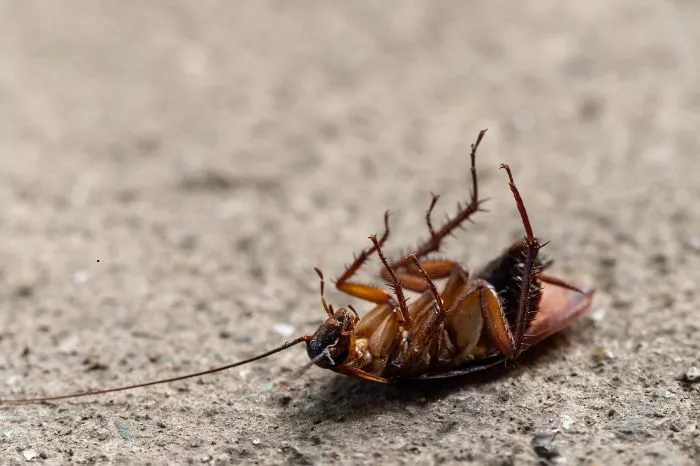
They have a flat, oval-shaped body and typically measure between 1/2 inch and 2 inches in length. Their flattened shape allows them to squeeze into narrow spaces around cabinets, appliances, plumbing, and other household features.
Homeowners may notice them most often at night when they leave hiding places to search for food and water.
Seeing even one cockroach during the day can sometimes indicate significant activity because these insects generally prefer to remain hidden.
Correct identification matters because German cockroaches can reproduce rapidly and may require a more comprehensive treatment plan than homeowners initially expect.
Eliminate Food Sources First
Cockroaches can survive on surprisingly small amounts of food.
Crumbs beneath appliances, grease around the stove, open pantry packages, pet food, and dirty dishes can all provide enough nutrition to support an infestation.
Homeowners should wipe counters regularly, sweep or vacuum floors, and clean underneath appliances when possible.
Dry foods should be stored in sealed containers.
Pet food should not remain exposed overnight, and garbage should be kept in containers with secure lids.
Reducing food availability makes the environment less attractive and can improve the effectiveness of pest-control treatments.
Consistent sanitation is easier when it becomes part of a regular household routine. These house cleaning tips provide additional ideas for keeping commonly used areas cleaner and reducing the buildup of food debris and clutter.
Take Away Their Water
Water is another major factor in cockroach survival.
Leaking faucets, plumbing drips, condensation, wet sponges, and standing water can all provide moisture.
Bathrooms and kitchens deserve particular attention because they combine water with numerous hiding places.
Repair leaks promptly and avoid leaving water in sinks overnight.
Homeowners should also check beneath refrigerators, dishwashers, and sinks for hidden moisture.
Reducing water sources can put additional pressure on the infestation and make treated baits more appealing.
What Research Says About Effective Cockroach Control
Research-backed pest management focuses on more than simply killing visible cockroaches. Effective control also depends on sanitation, exclusion, correct species identification, monitoring, and targeted treatment.
The University of California Statewide Integrated Pest Management Program emphasizes sanitation, exclusion, and species identification as important parts of cockroach management. Its guidance also explains that pesticides alone do not solve cockroach problems and that bait-based treatment can be more effective than relying only on sprays. This supports a broader approach that combines prevention, monitoring, and targeted control.
Clean Behind Appliances
Some of the worst cockroach hiding places are also among the least frequently cleaned areas of a home.
Refrigerators, ovens, dishwashers, and other appliances can provide warmth, darkness, crumbs, grease, and moisture.
When safe and practical, homeowners should pull appliances away from walls and clean the surrounding area.
Vacuum loose debris and wipe away grease buildup.
These areas should also be inspected for droppings, egg cases, or live insects.
Finding concentrated activity can help reveal where the infestation is strongest.
Seal Cracks and Entry Points
Cockroaches can hide in extremely narrow gaps.
Homeowners should inspect cabinets, baseboards, walls, pipes, windows, and doors for openings.
Caulk can be used to seal many small cracks, while larger gaps may require additional repair materials.
Openings around plumbing and utility penetrations deserve special attention because they can allow insects to move between walls and rooms.
Door sweeps and weatherstripping may also help reduce entry from outside.
Exclusion will not eliminate cockroaches already inside, but it can reduce hiding places and future movement.
Cockroaches Are Tough, but They Can Be Eliminated
Cockroaches have survived on Earth for hundreds of millions of years, so their reputation for resilience is understandable. Their ability to hide, reproduce, and survive on minimal resources can make infestations particularly frustrating.
However, homeowners can still gain control by attacking the problem from several directions.
Removing food and water, eliminating clutter, and sealing entry points when necessary can dramatically reduce an infestation.
The most effective approach is consistent rather than reactive. When homeowners eliminate both the insects and the conditions supporting them, even supposedly “indestructible” cockroaches can finally be driven out.
When a serious infestation requires more than routine cleaning and prevention, professional assistance may be appropriate. SpoliaMag also explains the different types of professionals who can help when cleaning out a home, including exterminators who can identify and address pest problems.
Frequently Asked Questions About Getting Rid of Cockroaches
The most effective approach usually combines sanitation, moisture control, exclusion, monitoring, and targeted treatment. Remove accessible food and water, clean hiding areas, seal cracks and gaps, and use appropriate cockroach baits or other treatments according to product directions. Persistent or widespread infestations may require a licensed pest-control professional.
Yes. Cleaning removes important food and shelter sources, but cockroaches may remain hidden inside wall voids, cabinets, appliances, or other protected spaces. They may also enter again through gaps or adjoining areas. Continued sanitation, moisture control, sealing, and monitoring are important even after activity appears to have stopped.
Professional help may be useful when cockroaches continue appearing despite consistent sanitation and treatment, when activity is present in several rooms, or when homeowners cannot identify where the insects are nesting. A pest-control professional can identify the species, locate concentrated activity, and develop a treatment strategy for the property.