
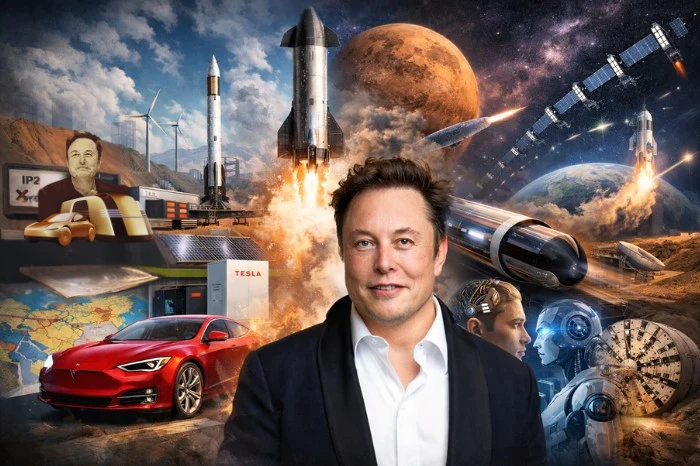
Who does not know Elon Musk? As of early 2026, the business magnate is already the richest individual in the world, and his net worth counts to about 700+ billion. A few months back, he became the first person to cross $500+ billion fortune. With his worth appreciating with each passing second, you can say that he is an inventor who continues to draw rabbits out of hats. The creative ideas he get from science-based books and invent the real products that we use daily, others can be found on paper, in patent filings or in white papers. The public refers to him as a dreamer, a disturber, a genius, and occasionally all three simultaneously. So, why does he has that perception in people’s mind?
It is because he gambles entire companies over what most people would deem impossible, and then drives them to completion until the world catches up. The practice of betting large, failing terribly and making another attempt is, like any device he has supported, an invention. Ironically, this approach runs against most conventional personal finance tips, yet it has defined Musk’s rise.
Today, I will take you through the inventions and ideas of Elon Musk that have already tilted entire industries and the ones that may continue to do the same.
Why the public compares Musk to Edison or Ford?
Because he constructs things that people can observe and utilize. Edison was the genius behind illuminating homes and cities. Hery Ford designed millions of vehicles that people used to travel across the globe. Similarly, Musk is a creator who constructs factories, rockets, and codes that we use every day. I understand that it is not an ideal comparison.
Admittedly, Edison and Musk lived and worked in different eras and on different issues, but they are alike. Both took enormous risks in public, were infatuated with each engineering detail, and did not fear failure. That is why people refer to Musk as the modern day Edison. He is now one of the most famous people in modern tech and business conversation.
Best of Elon Musk Inventions
1. Blastar: the Tiny Origin Story
Prior to PayPal and rockets, twelve-year-old Musk created a space shooter known as Blastar and sold the code to a magazine for $500. It’s a quaint fact. It is important because it demonstrates a trend: he was taught to make, deliver, and sell early. Even before he received any formal degrees from the universities, he was already thinking like an entrepreneur. Curious readers have reproduced the code online and there is even a web version to play the game. This low-budget debut places itself strangely beside SpaceX, yet it informs you something about his beginning.
2. Zip2 and X.com (PayPal): learning to build money and maps
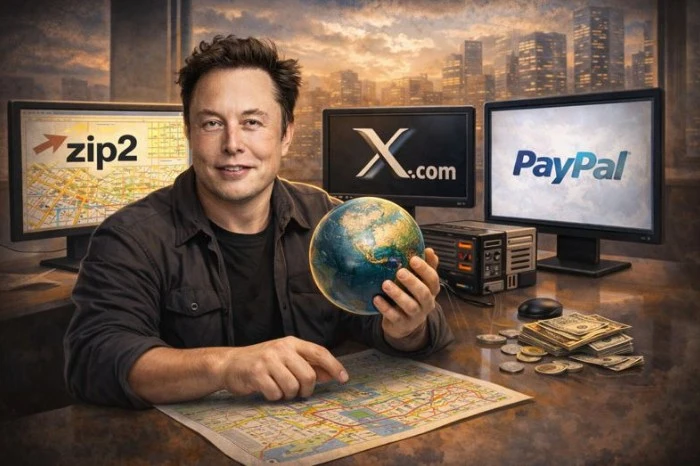
Zip2 was a map and urban guide concept, which assisted newspapers to place local listings on the internet. It was sold to Compaq and Musk received his first real runway. Next came X.com that was later transformed into payments giant PayPal following a merger. These companies provided Musk with the capital to address much bigger issues. The exits also taught him hard won finance tips that shaped his later bets.
3. Tesla: electric cars and energy, scaled
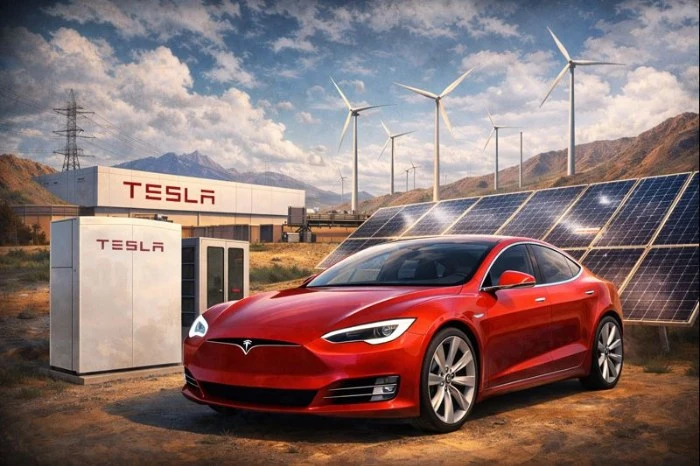
When they are asked what comes to mind when people mention Elon Musk, most people refer to Tesla as the greatest invention made by the billionaire. You can make a case for that. Tesla created a commercial electric vehicle movement, which made legacy car manufacturers take the issue seriously. In addition to cars, the business promoted battery production, charged networks, and residential power storage. Such moves are important since transport and power overlap. When the grid and cars are scaled-up to be electrical, the whole energy system transforms. Tesla did not create the electric motor. It did change its market, however. Tesla CEO Elon Musk personally drives a Tesla Model S Performance, Model X Plaid, and Cybertruck in his daily life.
4. SpaceX and Starship: reusable rockets and the interplanetary bet
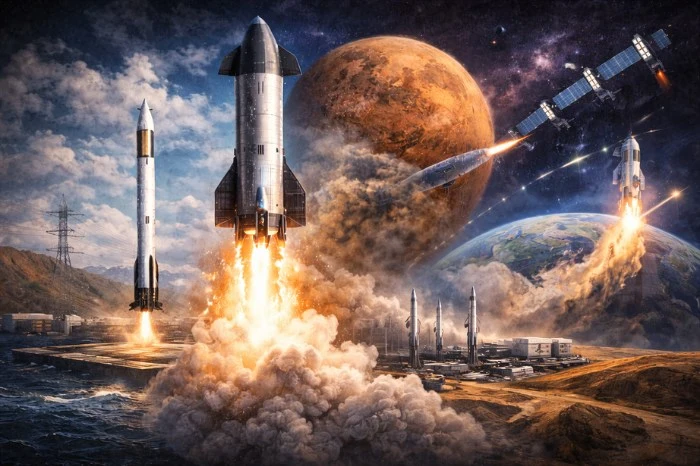
SpaceX started with a simple idea of reusing rockets just like airplanes. Back then, experts thought this was crazy. Years of failures followed. They now land their boosters and fly to the Space Station regularly. Flying that frequently has made space accessible to everybody at a lower cost. His work in aerospace and global connectivity has even led to him being recognized as a Nobel Peace Prize nominee in recent years.
Starship is supposed to take that a step further – a completely reusable heavy-lift rocket only to go to the moon and Mars, and to roll satellite launches down to a fraction of the current cost. Starship has already undergone dramatic test flights with parthoial failures and every test takes the industry a step further. The bigger picture: This is not about prestige on the part of Musk. It is about altering unit economics of orbital access. This is also where Musk’s rivalry with Jeff Bezos becomes most visible. SpaceX and Blue Origin are not just two space companies; they represent two very different billionaire visions for rockets, lunar missions, satellite internet, and the future of commercial space.
5. Neuralink: wiring computers to the mind
This one brings morals and optimism in the same room. Neuralink works to create brain computer interfaces. In 2024, the company fixed their chip in the first human patient. The initial outcomes that the company and Musk reported were the patient moving a cursor with thought. That is headline-grabbing.
The propositions of this tech are far better than this. It should be able to treat paralysis, recover senses, ultimately provide people with high bandwidth links to computational systems. It is thrilling and disturbing simultaneously. There are some issues related to this though including safety, regulation and long term consequences. Nevertheless, the clinical milestones are also real.
6. Hyperloop: an idea that forced engineering conversations
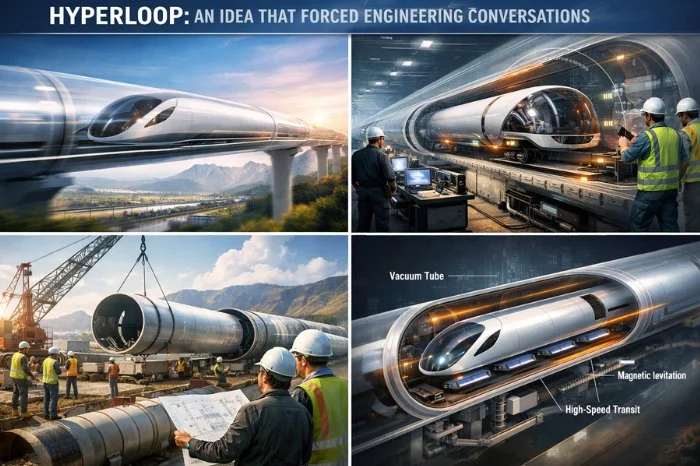
Hyperloop started as an open white paper by Musk’s team outlining extremely fast travel in low pressure tubes. It is not a business Musk himself developed into a worldwide system, but the concept spawned a thousand startups, academic research, and a new kind of discussion about long-haul transportation. The white paper itself is a clean design of how to plant an idea: post the vision, and allow other people to improve. It is not yet clear whether Hyperloop will turn into a regular way of commuting. Nevertheless, the idea changed what architects and designers will consider.
7. xAI and Grok: a new kind of AI challenger
In 2023, Musk proclaimed xAI because he desired a type of AI, which is safe to operate and excels in science. It released Grok, a chatbot closely connected to his social platform. It is not about a single product rather what Musk wants from a future where AI is at the center of people’s lives.
8. SolarCity, The Boring Company, Starlink: energy, tunnels, and internet from space
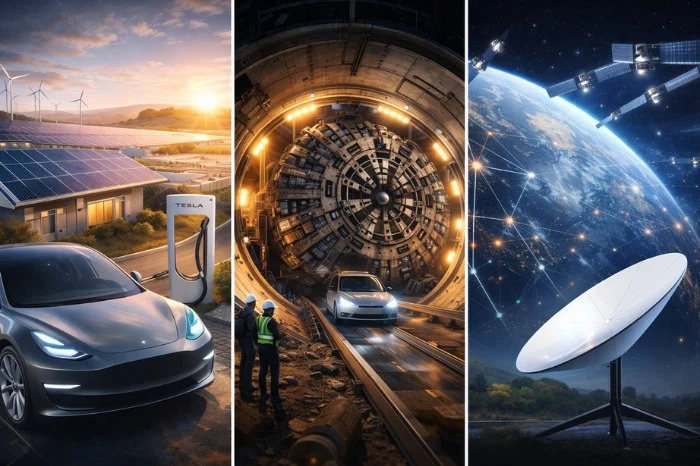
Solar roofs, utility-scale batteries, tunneling projects to reduce congestion, and a satellite internet constellation all would fit into a single idea, which is to build something where markets are falling behind. SolarCity and Tesla Energy attempted to integrate rooftop sun and batteries. The Boring Company is gambling on hacking dense cities with tunnels. Starlink is already transforming the remote locations through internet access using thousands of satellites. They are not as exciting as rockets, but they offer the groundwork which brings real lasting change.
Final Words
You may call these inventions or experiments. The 60 Minutes interview with CBS shows a man who is impatient, blunt, and not always tactful about rules or regulators. In any case, the Musk playbook is clear: find large messy problems, pour engineering resources and capital into them, take public beating, and do it again sooner than other companies. That trend has resulted in electric vehicles, less expensive releases, and early brain implants. This path has inspired many youngest billionaires to pursuit moonshot goals rather than safe bets. It has generated regulatory headaches and highly visible errors as well.
You Might Also Read: How Much Does Jeff Bezos make a Day?
FAQs about Elon Musk Inventions
His early ventures include Blastar, Zip2, X.com which was known as PayPal
The most recent inventions of Elon Musk include projects that are either implemented or in the testing phase in the real world. These include the Neuralink brain implant that has been tested on humans, Tesla Optimus robot that performs simple tasks, and Starlink satellite internet network. The next generation rocket by SpaceX has successfully passed several test missions and is currently under development to be used in future missions.
The future inventions of Musk are based on concepts that are yet to be completely utilized. These are autonomous robotaxis that have no steering wheels, widespread application of humanoid robots in ordinary life, Neuralink machines to think-based communication, and crewed Mars missions with Starship. He also wants Starlink to become the world’s main way of staying connected.
The majority of analysts believe that Elon Musk did not invent a single product, but rather revolutionized whole industries. Tesla put electric vehicles into the mainstream and reusable rockets by SpaceX reduced the cost of spaceflight by a significant margin. Amongst these, the revolution of electric vehicles by Tesla is considered to be his biggest achievement because of its immediate effect on transportation and energy policy on a global level.