

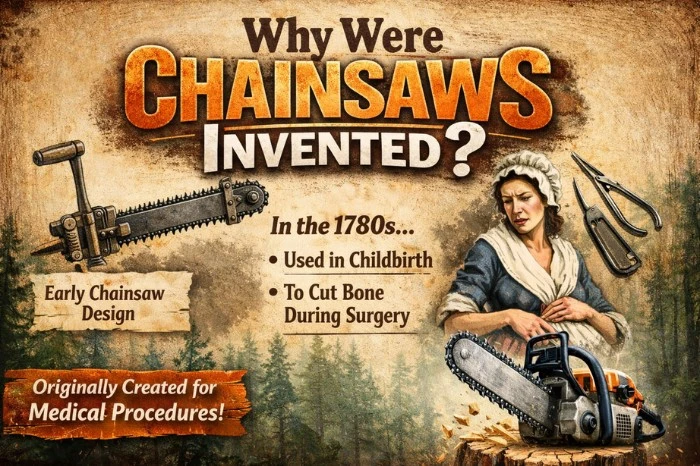
Most people hear the word chainsaw and picture lumberjacks, fallen trees, firewood, or noisy outdoor work. So it is understandable why one question still shocks people online: why were chainsaws invented?
The answer is strange, but it needs to be told carefully. The earliest chain-saw-like tool was not made for cutting trees. It was a small hand-powered surgical tool developed in the late 1700s for childbirth-related procedures and bone surgery. The modern chainsaw used for forestry, logging, and yard work came much later.
Summary
Chainsaws were originally invented as surgical tools, not wood-cutting machines. In the late 1700s, Scottish doctors John Aitken and James Jeffray developed an early chain-saw-like instrument for procedures such as symphysiotomy during difficult childbirth and for removing diseased bone. It was small, hand-powered, and looked nothing like the modern chainsaws used today. Powered chainsaws for cutting wood came much later, after inventors adapted chain-cutting technology for timber, forestry, and outdoor work.
Were Chainsaws Really Invented for Childbirth?
Yes, but with one important correction. The first chainsaw was not the large motorized tool people imagine today. It was closer to a flexible surgical saw made from a fine chain with cutting teeth. Doctors used it by hand, not by engine.
The viral version says, “Chainsaws were invented for childbirth.” That is mostly true in the sense that the earliest chain-saw-like tool was used in childbirth-related surgery. But it was also used for bone surgery more broadly. A better, more accurate answer is this:
The earliest chainsaw-like tool was invented for childbirth-related symphysiotomy and for cutting diseased bone. Modern chainsaws were later developed for wood cutting.
That distinction matters because the internet often makes the story sound like doctors were using today’s outdoor chainsaws in delivery rooms. They were not. The original instrument was small, manual, and surgical.
What Was the First Chainsaw Actually Like?
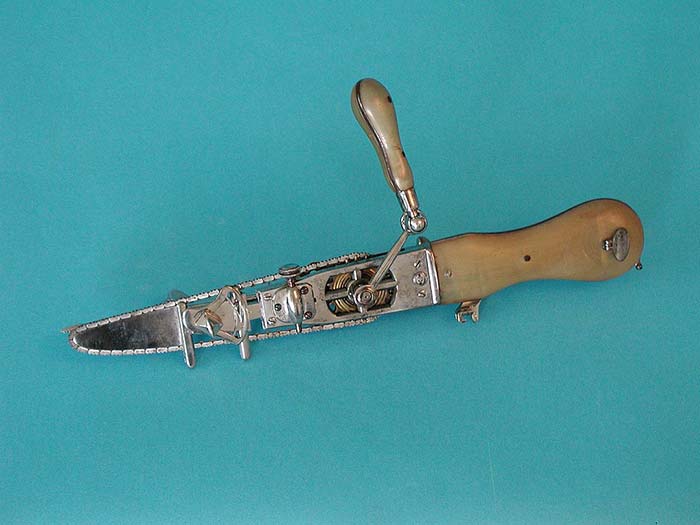
The first chainsaw did not have a motor, a long bar, a fuel tank, or the aggressive look of a modern forestry tool. It was a fine serrated chain attached to handles. The operator moved it manually so the chain could cut through bone or cartilage more efficiently than older surgical knives and saws.
At the time, surgery was far more dangerous than it is today. Anesthesia, antiseptic methods, and modern cesarean delivery were not yet developed in the way we know them now. Doctors were trying to find tools that could make difficult operations faster and more controlled, even if those procedures sound brutal to modern readers.
This is why the chainsaw origin story feels so disturbing. The tool we now associate with trees and outdoor work began as part of a very different medical world.
Who Invented the First Chainsaw?
The earliest chain-saw-like surgical tool is usually linked to two Scottish doctors: John Aitken and James Jeffray.
John Aitken described a flexible chain saw in his late-18th-century work on midwifery. James Jeffray also worked with a similar surgical saw and later discussed its use in operations involving bone. Their work belongs to a period when doctors were trying to improve surgical instruments for difficult procedures, including childbirth complications and removal of diseased bone.
This is where the confusion starts. Aitken and Jeffray were not inventing the modern chainsaw that homeowners, gardeners, and loggers use today. They were working with a surgical cutting instrument. The connection is real, but the tool evolved dramatically over time.
What Is Symphysiotomy?
Symphysiotomy is a surgical procedure in which the cartilage of the pubic symphysis is divided to widen the pelvis during obstructed childbirth. In simpler words, it was used when a baby could not be delivered safely through the birth canal and other options were limited.
Today, symphysiotomy is rare in most modern healthcare systems because cesarean delivery became safer and more widely available. But in earlier medical history, especially before modern surgical standards, doctors sometimes used symphysiotomy as an emergency option.
This is the medical context behind the chainsaw’s origin. The early surgical chain saw was designed to cut more efficiently and precisely than some of the older tools available at the time. It was not invented for shock value. It came from a real medical problem, in a time when childbirth could be extremely dangerous.
How Did Chainsaws Move From Surgery to Wood Cutting?
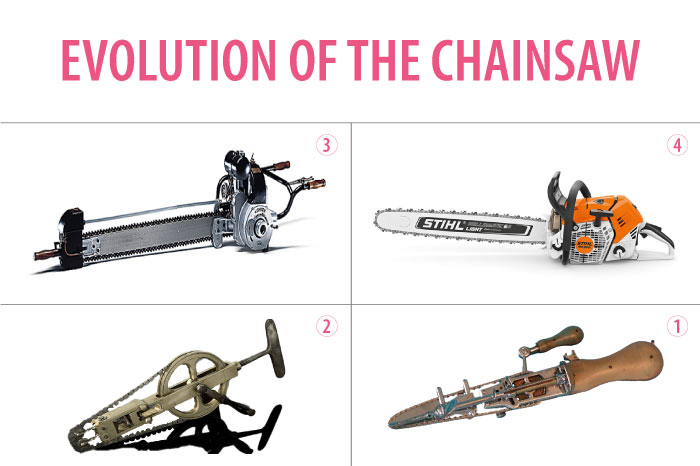
The movement from surgery to wood cutting did not happen overnight. The surgical chain saw introduced the idea of a cutting chain, but modern chainsaws required later mechanical changes, stronger materials, powered motors, and a completely different purpose.
In 1830, German orthopedist Bernhard Heine developed the osteotome, a bone-cutting tool that looked closer to the idea of a modern chainsaw. It still belonged to medicine, but it helped show how a chain mechanism could be used for controlled cutting.
Later, inventors adapted chain-cutting ideas for timber and forestry. The first portable chainsaw patent is often associated with Canadian inventor James Shand in 1918. Then, in the 1920s, companies such as Stihl helped move chainsaws into the powered era. German manufacturer Stihl introduced an early electric chainsaw in 1926, helping transform the tool from a surgical idea into a machine for wood cutting.
That evolution also explains why there are now several types of chainsaws used today, from compact pruning saws to heavy-duty forestry machines. For larger outdoor jobs, gas chainsaws for heavy-duty cutting became popular because of their power, portability, and longer runtime.
Chainsaw History Timeline
| Period | Development | Why It Matters |
|---|---|---|
| Late 1700s | John Aitken and James Jeffray develop early chain-saw-like surgical tools | The chainsaw concept begins in medicine, not forestry |
| 1830 | Bernhard Heine develops the osteotome | A more mechanical bone-cutting tool moves the design closer to later chain saws |
| 1890s | The Gigli saw becomes widely used in surgery | It replaces many older surgical saws because it is simpler and more precise |
| 1918 | James Shand patents a portable chainsaw design | Chainsaws begin moving toward forestry and wood cutting |
| 1926 | Stihl introduces an early electric chainsaw | Powered chainsaws begin shaping the modern tool industry |
| Modern era | Gas, electric, battery, pole, and mini chainsaws become common | The tool becomes part of forestry, landscaping, storm cleanup, and home maintenance |
Myth vs Truth: The Chainsaw Origin Story
| Claim | Truth |
|---|---|
| Chainsaws were invented for cutting trees. | Modern chainsaws are used for trees, but the earliest chain-saw-like tool was surgical. |
| Chainsaws were invented only for childbirth. | The early tool was used for childbirth-related symphysiotomy and for bone surgery. |
| The first chainsaw looked like today’s chainsaw. | False. It was small, hand-powered, and designed for medical use. |
| TikTok invented the story. | False. TikTok made the story viral, but the historical origin existed long before social media. |
| Doctors used modern chainsaws in childbirth. | False. The original tool was a manual surgical chain saw, not a modern motorized chainsaw. |
Why Did This Fact Go Viral?
The story went viral because it clashes so strongly with what people expect. A chainsaw feels like an outdoor tool. Childbirth feels like the last place anyone would imagine it. That emotional shock made the question perfect for TikTok, X, Reddit, and other social platforms.
When people searched “why were chainsaws invented,” they found the childbirth connection and shared their reactions. The humor came from disbelief. Many users joked that they wished they had never searched the question at all.
That viral reaction is understandable, but it also created a problem. The meme version is short, scary, and sometimes misleading. The real history is more specific: the early chain saw was a surgical instrument used in a very different medical era.
Why Were Chainsaws Invented Joke?

The “why were chainsaws invented” joke is based on the shock people feel after learning the tool’s medical origin. The joke usually works like this: one person tells another not to Google why chainsaws were invented, which makes them search it immediately. Then they react with horror or disbelief.
The joke spread because the answer sounds too strange to be true. But unlike many internet facts, this one is not completely made up. The issue is that the viral version often leaves out the details. It should not imply that the modern chainsaw was invented as a delivery-room machine. It should say that the earliest chain-saw-like surgical tool was connected to childbirth and bone surgery.
That is the difference between a scary meme and a useful historical answer.
Why Were Chainsaws Invented Meme?

The meme version of the story took off because it combines three things people love online: curiosity, horror, and surprise. Some memes show people reacting dramatically after searching the question. Others connect the origin story to horror-movie imagery, even though that has nothing to do with the actual history.
This section of the story is useful because it explains why the topic became popular again. But the meme should not be the main focus of the article. The real ranking value is in the origin, inventors, medical context, and evolution of the tool.
How Modern Chainsaws Are Different From the Original Surgical Tool
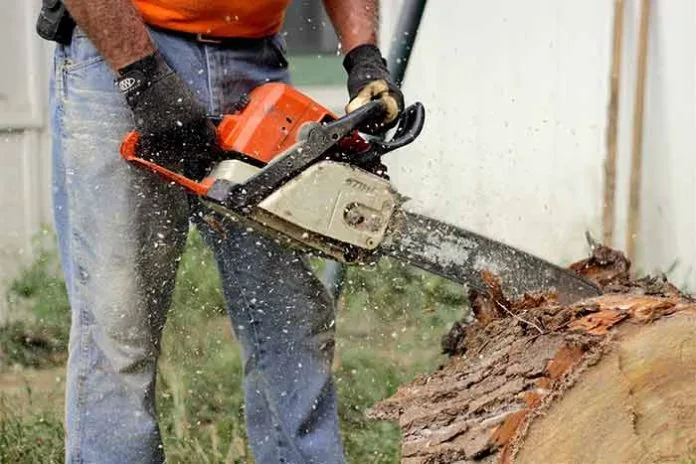
Modern chainsaws are built for wood, not surgery. Their design includes a guide bar, a fast-moving cutting chain, a motor or engine, lubrication, safety features, and different chain types depending on the job.
That is why today’s chainsaw guides focus on use cases such as pruning, logging, firewood, storm cleanup, and property maintenance. A homeowner choosing between electric and gas models is dealing with a completely different tool from the surgical chain saw of the 1700s.
Even small maintenance topics show how far the tool has evolved. Once chainsaws became wood-cutting machines, lubrication became essential, which is why users often compare safe options such as chainsaw bar oil substitutes when regular bar oil is not available.
Why the Chainsaw’s Origin Still Matters
The chainsaw’s origin matters because it shows how inventions can move far beyond their first purpose. A tool designed for one medical problem eventually inspired machines used in forestry, construction, emergency cleanup, landscaping, and home maintenance.
That is not unusual in invention history. Many everyday objects have complicated beginnings. Some were created for one purpose, then became famous for something else. Others were improved by several people over many years, making it difficult to credit just one inventor.
This is why the chainsaw story fits naturally inside invention-history discussions. It is not just a viral fact. It is a reminder that technology often changes meaning as society changes around it.
Related Invention Origin Stories
The chainsaw is not the only everyday object with a surprising past. If you enjoy strange invention histories, you may also like reading about what was invented in 2012, when peanut butter was invented, and who invented the mailbox.
Each story shows how common objects often have more layered histories than people expect.
Final Takeaway
Chainsaws were not originally invented for cutting trees. The earliest chain-saw-like tool was developed as a surgical instrument in the late 1700s, connected to childbirth-related symphysiotomy and bone surgery. Over time, the cutting-chain idea changed completely. It moved from medicine into mechanics, then into forestry and outdoor work.
That is why the answer feels so strange. The chainsaw began in one of the most sensitive areas of medical history and ended up becoming one of the most recognizable cutting tools in the world.
Sources
- Scottish Medical Journal: The Chain Saw: A Scottish Invention
- History: Why Were Chainsaws Invented?
- Stihl: Chainsaw and tool history reference
FAQs About Why Chainsaws Were Invented
Yes, the earliest chain-saw-like surgical tool was developed for childbirth-related symphysiotomy and bone surgery. However, it was a small hand-powered medical instrument, not a modern motorized chainsaw.
The first chain-saw-like surgical tool is usually linked to Scottish doctors John Aitken and James Jeffray in the late 1700s. They worked with flexible chain saw instruments for surgical use.
The earliest chain-saw-like tool was used for medical procedures, especially symphysiotomy during difficult childbirth and removal of diseased bone.
Chainsaws became wood-cutting tools much later. Portable and powered chainsaw development moved forward in the early 20th century, especially with patents and manufacturing work from inventors and companies such as James Shand and Stihl.
No. The earliest surgical chain saw was hand-powered. Motors and engines came much later when chainsaws were adapted for timber, forestry, and outdoor cutting.
People joke about it because the origin sounds shocking and unexpected. The meme version spread widely on social media, especially because most people associate chainsaws with trees, not medical history.