

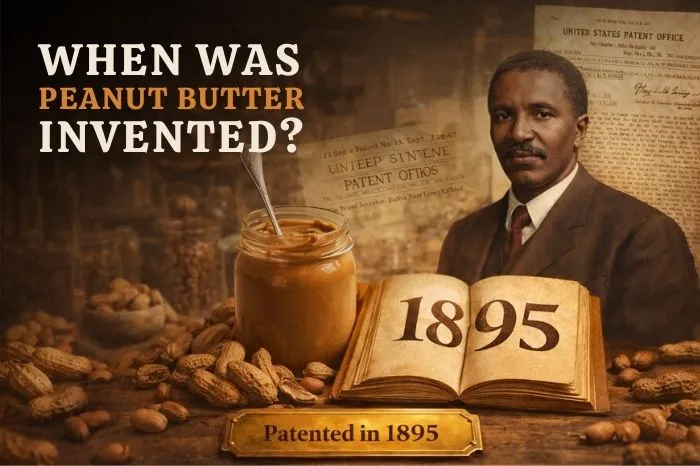
Peanut butter has been enduring in American culture and is more than a staple in the pantry. Its history is beyond the plastic tubs found in grocery stores today. Incas and Aztecs around 1000 B.C. ago, invented this by roasting peanuts and ground them into a thick and oily paste. But the smooth, shelf-stable spread we enjoy today is very different from that ancient mixture.
Who Invented the Peanut Butter?
The story of peanut butter as a commercially available product is associated with particularly three men for their innovations to solve different problems related to peanut butter.
Marcellus Gilmore Edson (1884)
A chemist from Canada who secured a patent to milling the roasted peanuts between two heated surfaces to create a butter-like paste for those who were unable to chew solid foods.
Dr. John Harvey Kellogg (1895)
The well-known cereal innovator who patented the use of boiled peanuts. He provided this high-protein paste to patients at his Battle Creek Sanitarium, convinced that it served as a healthy alternative to meat.
Dr. Ambrose Straub (1903)
This physician from St. Louis received a patent for a machine which was designed to make peanut butter successfully and transform it from laboratory level to small-scale manufacturing.
Did George Washington Carver Actually Invent the Spread?
Contrary to popular belief, there is a stigma that George Washington Carver did invent peanut butter. However, he never patented this spread, yet his influence on the peanut industry was enormous.
Carver was a relentless supporter of the peanut, who discovered more than 300 uses for it, from dyes and plastics to medicinal oils. He encouraged Southern farmers to plant peanuts, which could restore worn-out soil; he helped transform the peanut from a little-known crop into a staple of American agriculture.
From Health Food to Household Name
As the time passed, peanut butter transformed from a novelty food found in costly health resorts and sanitariums to a vital wartime need. In fact, it was served as an essential protein source for soldiers during the World Wars I and II.
In the 1920s when Joseph Rosefield figured out how to stop the oil from separating by utilizing hydrogenated vegetable oil, this innovation led to the rise of the well-known brands that we recognize today:
Reese’s Peanut Butter Cups (1928)
H.B. Reese, a former dairy farmer for Milton Hershey, chose to combine chocolate and peanut butter in his basement. The outcome was a stunning marvel that continues to be a best-seller.
Procter & Gamble
They introduced Jif to the market a bit later, but it became popular due to its unusual “sweet and salt” balance and creamy texture. It got great fame and became the leader in the U.S.
Peanut Butter Nutrition
The original peanut butter nutrition profile was remarkably similar to what we see today. It was prized for being “nutrient-dense,” packed with healthy monounsaturated fats, protein, and Vitamin E.
In an era where affordable protein was inadequate, peanut butter was a Micronutrient food which became a long-lasting energy source that didn’t require refrigeration.
You Might Also Like: